Matchup
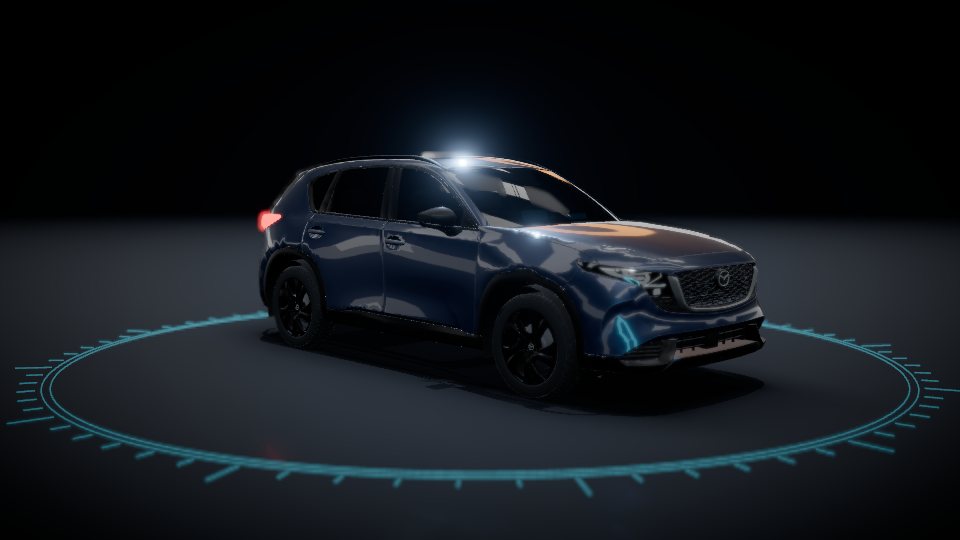
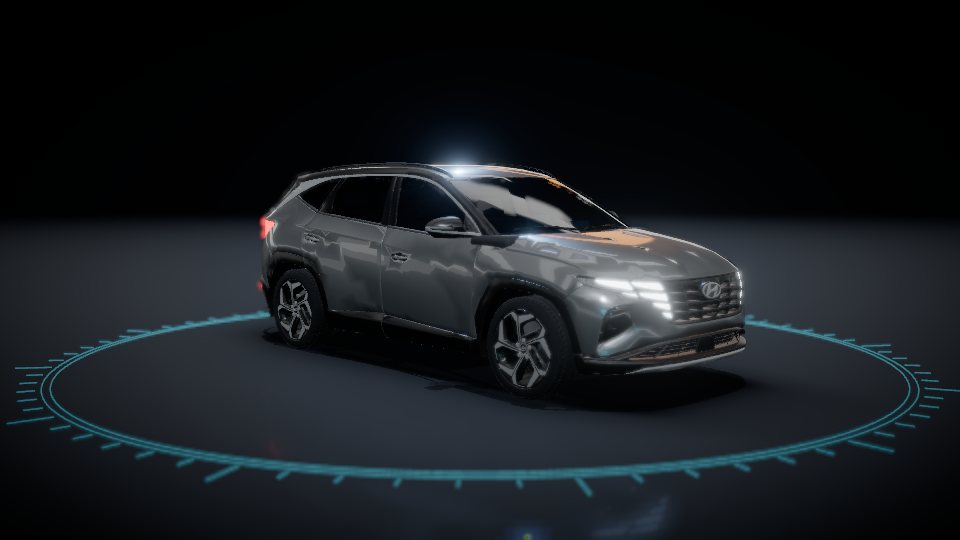
Mazda CX-5 vs Hyundai Tucson
The 2026 CX-5 2.5 S Preferred against the 2026 Tucson SEL AWD, through ten physics labs and every official rating we could find.
Last checked Oct 24, 2026. Every figure links to its source.
The short answer
- The CX-5 gets to 60 mph 0.8 s sooner: 8.0 s against 8.8 s. TestedCar and DriverTestedCar and Driver
- The CX-5 stops from 70 mph in 173 ft, 5 ft shorter than the Tucson (178 ft). TestedCar and DriverTestedCar and Driver
- The Tucson is rated to tow 1,250 lb more: 2,750 lb against 1,500 lb. PublishedMazdaPublishedHyundai
- On low beams, the fastest you can drive the Tucson and still stop inside the lit road is 67 mph; in the CX-5 it’s 58 mph (dry road, 1.5-second reaction). Simulatedfrom IIHSSimulatedfrom IIHS
Who each one suits
The CX-5 drives better: quicker to 60 by 0.8 s, 5 ft shorter from 70 mph, and a tighter turning circle. It’s an IIHS Top Safety Pick+.
The Tucson is the more useful one: $1,695 less in these trims, 1,250 lb more towing, 5.0 cu ft more cargo, more room front and rear, and low beams that reach 66 ft farther.
At a glance
| CX-5 | Tucson | |
|---|---|---|
| Starting price, this trim | $35,845PublishedMazda | $34,150PublishedHyundai |
| Powertrain | 2.5 L four-cylinder, direct injection, cylinder deactivation · i-Activ AWD (electronically controlled rear coupling) | 2.5 L four-cylinder, direct and port injection, 13.0:1 compression · HTRAC AWD (electronically controlled rear coupling) |
| 0–60 mph, tested or claimed | 8.0 sTestedCar and Driver | 8.8 sTestedCar and Driver |
| Braking 70–0 mph, tested | 173 ft (52.7 m)TestedCar and Driver | 178 ft (54.3 m)TestedCar and Driver |
| EPA combined | 26 mpg (9.0 L/100 km)PublishedEPA | 26 mpg (9.0 L/100 km)PublishedEPA |
| Cargo behind the second row | 33.7 cu ft (954 L)PublishedMazda | 38.7 cu ft (1,096 L)PublishedHyundai |
| Large suitcases, packed | 6Simulatedfrom Mazda | 6Simulatedfrom Hyundai |
| Seats | 5PublishedMazda | 5PublishedHyundai |
| Crash ratings | IIHS Top Safety Pick+ | IIHS crash tests G/G/G |
Acceleration
The CX-5 gets to 60 mph 0.8 s sooner: 8.0 s against 8.8 s.
| CX-5 | Tucson | |
|---|---|---|
| Power | 187 hp (139 kW)PublishedMazda | 187 hp (139 kW)PublishedHyundai |
| Torque | 186 lb-ft (252 Nm)PublishedMazda | 178 lb-ft (241 Nm)PublishedHyundai |
| 0–60 mph, tested or claimed | 8.0 sTestedCar and Driver | 8.8 sTestedCar and Driver |
| 0–60 mph, our simulation | 7.9 sSimulatedfrom Car and Driver | 8.8 sSimulatedfrom Car and Driver |
| Passing, 50–70 mph | 5.5 sTestedCar and Driver | 6.0 sTestedCar and Driver |
| Quarter mile | 16.2 sTestedCar and Driver | 16.7 sTestedCar and Driver |
Braking and stopping distance
The CX-5 stops from 70 mph in 173 ft, 5 ft shorter than the Tucson (178 ft).
| CX-5 | Tucson | |
|---|---|---|
| Braking 70–0 mph, tested | 173 ft (52.7 m)TestedCar and Driver | 178 ft (54.3 m)TestedCar and Driver |
| Braking 60–0 mph, tested | no data | 120 ft (36.6 m)TestedMotorTrend |
| Wet road from 70 mph, 1 s reaction | 359 ft (109.4 m)Simulatedfrom Car and Driver | 367 ft (111.7 m)Simulatedfrom Car and Driver |
| Dry road from 70 mph, 1 s reaction | 276 ft (84.0 m)Simulatedfrom Car and Driver | 281 ft (85.6 m)Simulatedfrom Car and Driver |
| Packed snow from 30 mph, 1 s reaction | 166 ft (50.7 m)Simulatedfrom Car and Driver | 170 ft (51.8 m)Simulatedfrom Car and Driver |
Rollover
No meaningful gap between the CX-5 and the Tucson on what we can measure here.
| CX-5 | Tucson | |
|---|---|---|
| Sideways slide that trips it into a roll | 11 mph (18 km/h)Simulated, estimated inputsfrom NHTSA | 11 mph (18 km/h)Simulated, estimated inputsfrom NHTSA |
| Static stability factor (half-track ÷ CoG height) | 1.21Simulated, estimated inputsfrom NHTSA | 1.22Simulated, estimated inputsfrom NHTSA |
Efficiency and running costs
No meaningful gap between the CX-5 and the Tucson on what we can measure here.
| CX-5 | Tucson | |
|---|---|---|
| EPA combined | 26 mpg (9.0 L/100 km)PublishedEPA | 26 mpg (9.0 L/100 km)PublishedEPA |
| Fuel or charging, 15,000 mi a year | $2,583/yrDerivedEPA | $2,583/yrDerivedEPA |
| Steady 75 mph, our simulation | 30 mpg (7.8 L/100 km)Simulated, estimated inputsfrom Car and Driver | 26 mpg (9.1 L/100 km)Simulatedfrom Car and Driver |
| Drag coefficient | 0.37DerivedMazda | 0.33PublishedHyundai |
Grip, snow and maneuvering
The CX-5 turns in a 1.8 ft tighter circle: 36.8 ft against 38.6 ft.
| CX-5 | Tucson | |
|---|---|---|
| Skidpad grip, tested | 0.83 gTestedCar and Driver | 0.83 gTestedCar and Driver |
| Cornering grip, our simulation | 0.83 gSimulatedfrom Car and Driver | 0.83 gSimulatedfrom Car and Driver |
| Pulling away on packed snow | 0.26 gSimulatedfrom Car and Driver | 0.25 gSimulatedfrom Car and Driver |
| Turning circle | 36.8 ft (11.2 m)PublishedMazda | 38.6 ft (11.8 m)PublishedHyundai |
| Ground clearance | 8.2 in (21 cm)PublishedMazda | 8.3 in (21 cm)PublishedHyundai |
| Tires | Toyo Open Country H/T 225/55R19 99V all-season (as on C/D’s Premium Plus) · 225/55R19TestedCar and Driver | 235/60R18 all-season · 235/60R18PublishedHyundai |
Space, luggage and fit
The Tucson is rated to tow 1,250 lb more: 2,750 lb against 1,500 lb.
| CX-5 | Tucson | |
|---|---|---|
| Seats | 5PublishedMazda | 5PublishedHyundai |
| Large suitcases, packed | 6Simulatedfrom Mazda | 6Simulatedfrom Hyundai |
| Carry-ons in the space left | 0Simulatedfrom Mazda | 4Simulatedfrom Hyundai |
| Cargo behind the second row | 33.7 cu ft (954 L)PublishedMazda | 38.7 cu ft (1,096 L)PublishedHyundai |
| Cargo, seats folded | 66.5 cu ft (1,883 L)PublishedMazda | 74.8 cu ft (2,118 L)PublishedHyundai |
| Towing | 1,500 lb (680 kg)PublishedMazda | 2,750 lb (1,247 kg)PublishedHyundai |
| Driver head room, 6 ft 4 in driver | +1.0 in (3 cm)Simulatedfrom Mazda | +1.9 in (5 cm)Simulatedfrom Hyundai |
| Driver head room, 5 ft 11 in driver | +3.4 in (9 cm)Simulatedfrom Mazda | +4.2 in (11 cm)Simulatedfrom Hyundai |
| Driver head room, 5 ft 4 in driver | +6.3 in (16 cm)Simulatedfrom Mazda | +7.2 in (18 cm)Simulatedfrom Hyundai |
| Rear head room, 5 ft 11 in passenger | +3.4 in (9 cm)Simulatedfrom Mazda | +2.5 in (6 cm)Simulatedfrom Hyundai |
| Rear knee room, 5 ft 11 in behind 5 ft 11 in | +3.7 in (9 cm)Simulatedfrom Mazda | +4.8 in (12 cm)Simulatedfrom Hyundai |
| Rear head and knee, 6 ft 4 in behind 6 ft 4 in | +0.8 in head · −0.6 in kneeSimulatedfrom Mazda | −0.1 in head · +0.5 in kneeSimulatedfrom Hyundai |
| Front head room, published | 39.7 in (101 cm)PublishedMazda | 40.1 in (102 cm)PublishedHyundai |
| Rear head room, published | 40.2 in (102 cm)PublishedMazda | 39.5 in (100 cm)PublishedHyundai |
| Rear leg room, published | 39.9 in (101 cm)PublishedMazda | 41.3 in (105 cm)PublishedHyundai |
Cabin noise
No meaningful gap between the CX-5 and the Tucson on what we can measure here.
| CX-5 | Tucson | |
|---|---|---|
| Cabin sound at 70 mph | 67 dBAEstimateCar and Driver | no data |
Visibility
No meaningful gap between the CX-5 and the Tucson on what we can measure here.
| CX-5 | Tucson | |
|---|---|---|
| Road hidden in front of the bumper, 5 ft 9 in driver | 22 ft (6.8 m)Simulated | 22 ft (6.8 m)Simulated |
| Ground visible within 33 ft ahead | 37%Simulated | 37%Simulated |
Headlights and night stopping
On low beams, the fastest you can drive the Tucson and still stop inside the lit road is 67 mph; in the CX-5 it’s 58 mph (dry road, 1.5-second reaction).
| CX-5 | Tucson | |
|---|---|---|
| IIHS headlight rating | AcceptableTestedIIHS | AcceptableTestedIIHS |
| Low beams, straight road (right edge) | 248 ft (75.7 m)TestedIIHS | 314 ft (95.8 m)TestedIIHS |
| Fastest you can stop inside the low beams | 58 mph (94 km/h)Simulatedfrom IIHS | 67 mph (109 km/h)Simulatedfrom IIHS |
| High beams, straight road (right edge) | 498 ft (151.9 m)TestedIIHS | 600 ft (183.0 m)TestedIIHS |
Crash safety
No meaningful gap between the CX-5 and the Tucson on what we can measure here.
| CX-5 | Tucson | |
|---|---|---|
| IIHS small overlap front | GoodTestedIIHS | GoodTestedIIHS |
| IIHS moderate overlap front (updated) | GoodTestedIIHS | GoodTestedIIHS |
| IIHS side (updated) | GoodTestedIIHS | GoodTestedIIHS |
| IIHS award | 2026 Top Safety Pick+PublishedIIHS | no data |
| Curb weight | 3,856 lb (1,749 kg)PublishedMazda | 3,695 lb (1,676 kg)TestedCar and Driver |
Where each one wins
Mazda CX-5
- The CX-5 gets to 60 mph 0.8 s sooner: 8.0 s against 8.8 s. TestedCar and DriverTestedCar and Driver
- The CX-5 stops from 70 mph in 173 ft, 5 ft shorter than the Tucson (178 ft). TestedCar and DriverTestedCar and Driver
- Passing from 50 to 70 mph takes 5.5 s in the CX-5 and 6.0 s in the Tucson. TestedCar and DriverTestedCar and Driver
- The CX-5 turns in a 1.8 ft tighter circle: 36.8 ft against 38.6 ft. PublishedMazdaPublishedHyundai
- A 5-ft-11 rear passenger has +3.4 in of head room in the CX-5 and +2.5 in in the Tucson. Simulatedfrom MazdaSimulatedfrom Hyundai
Hyundai Tucson
- The Tucson is rated to tow 1,250 lb more: 2,750 lb against 1,500 lb. PublishedMazdaPublishedHyundai
- On low beams, the fastest you can drive the Tucson and still stop inside the lit road is 67 mph; in the CX-5 it’s 58 mph (dry road, 1.5-second reaction). Simulatedfrom IIHSSimulatedfrom IIHS
- In the trims shown, the Tucson costs $1,695 less: $34,150 against $35,845 for the CX-5, destination included. PublishedMazdaPublishedHyundai
- IIHS measured the Tucson’s low beams lighting the road 66 ft farther on a straightaway: 314 ft against 248 ft. TestedIIHSTestedIIHS
- The Tucson has 5.0 cu ft more cargo space behind its second row: 38.7 cu ft against 33.7 cu ft. PublishedMazdaPublishedHyundai
- A 6-ft-4 driver has +1.9 in between head and headliner in the Tucson and +1.0 in in the CX-5. Simulatedfrom MazdaSimulatedfrom Hyundai
- Behind a 5-ft-11 driver, a 5-ft-11 passenger gets +4.8 in of knee room in the Tucson and +3.7 in in the CX-5. Simulatedfrom MazdaSimulatedfrom Hyundai
Other trims
- CX-5 2.5 S Preferred · on this page
- CX-5 2.5 S Premium Plus
- Tucson SEL AWD · on this page
- Tucson Hybrid Limited AWD
Keep comparing
Sources
- Car and Driver: Tested: 2026 Mazda CX-5 Escalates a Sibling Rivalry (2.5 S Premium Plus, instrumented results) (2026-05)
- Car and Driver: Tested: 2022 Hyundai Tucson 2.5L Is Dazzling but Slow (Limited AWD) (2021-06)
- Mazda USA News: 2026 Mazda CX-5 Spec Deck (engine, gearing, chassis, dimensions, H-points, cargo, weights) (2026-01)
- Hyundai Motor America: 2026 Tucson features & specs (trims, MSRP, weights, interior, cargo) (2026-10)
- IIHS: 2026 Mazda CX-5 ratings (redesigned for 2026) (2026-10)
- IIHS: 2026 Hyundai Tucson ratings (crash tests apply to 2022–26; headlights to 2025–26) (2026-10)
- Mazda USA: 2026 CX-5 trims and starting MSRP (excludes $1,595 destination) (2026-10)
- US EPA (fueleconomy.gov): 2026 Mazda CX-5 4WD 2.5 L, Automatic (S6) ratings (id 50290) (2026-10)
- US EPA (fueleconomy.gov): 2026 Hyundai Tucson AWD (id 49500) and Tucson Hybrid AWD (id 49498) ratings (2026-10)
- MotorTrend: 2025 Hyundai Tucson XRT First Test (HTRAC AWD) (2025-01)
- NHTSA 5-Star Safety Ratings: 2025 Mazda CX-5 SUV AWD, previous generation (VehicleId 20108): 16.9% rollover risk (2026-10)
- NHTSA 5-Star Safety Ratings: 2025 Hyundai Tucson SUV AWD (VehicleId 20563): 17.4% rollover risk (2026-10)
- Car and Driver: Mazda CX-5 review (75-mph highway test not yet run on the 2026) (2026-10)
- Car and Driver: 2026 Hyundai Tucson review (Tucson XRT 75-mph highway test) (2026-10)
- Mazda Technical Review No. 42: Aerodynamic Development for All-New CX-5 Adapting Flow Control Technology (Cd −5%, Cd·A −2% vs the previous CX-5) (2026-05)
- Hyundai Motor America Newsroom: 2025 Tucson specifications and features (track by wheel size, Cd 0.33) (2024-12)
- IIHS: Four more models take home Top Safety Pick+ awards (Jul 9, 2026) (2026-07)
Badges: Published figures come from the maker, a regulator or a rating agency; Tested from an independent instrumented test; Simulated are computed by our physics from those inputs (how); Estimate means no published value exists. Confirm figures with the maker or your dealer before you buy.