Matchup
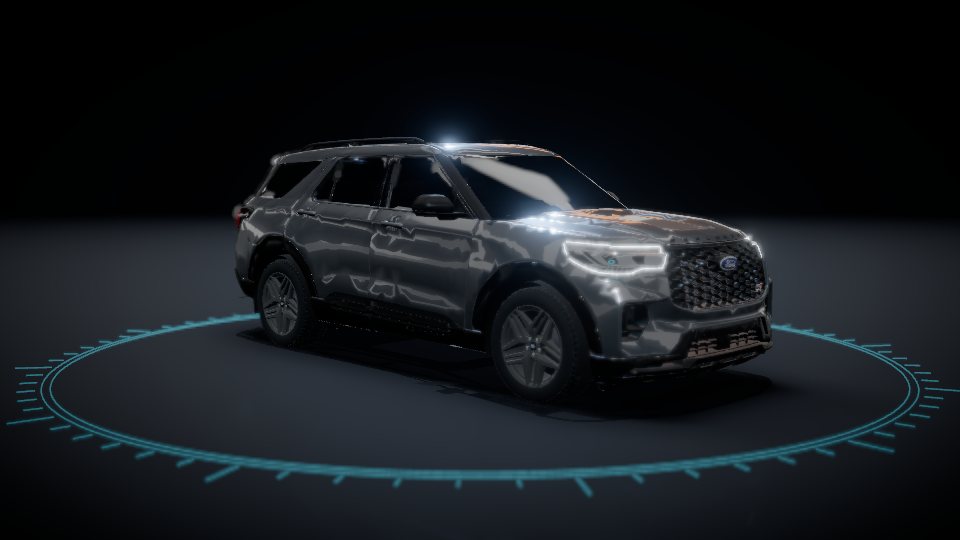
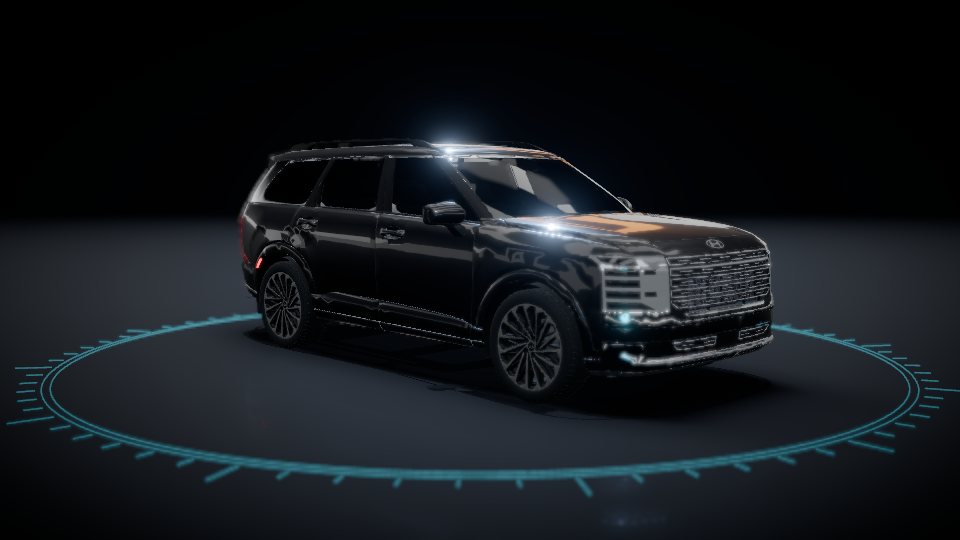
Ford Explorer vs Hyundai Palisade
The 2026 Explorer Active 4WD against the 2026 Palisade Calligraphy AWD, through ten physics labs and every official rating we could find.
Last checked Oct 24, 2026. Every figure links to its source.
The short answer
- In the trims shown, the Explorer costs $13,780 less: $44,380 against $58,160 for the Palisade, destination included. PublishedValor FordPublishedHyundai
- At 15,000 miles a year and national average prices, the Explorer costs about $439 a year less to run: $2,920/yr against $3,359/yr. DerivedEPADerivedEPA
- The Explorer gets to 60 mph 1.8 s sooner: 6.2 s against 8.0 s. TestedCar and DriverTestedCar and Driver
- The Explorer stops from 70 mph in 170 ft, 5 ft shorter than the Palisade (175 ft). TestedCar and DriverTestedCar and Driver
At a glance
| Explorer | Palisade | |
|---|---|---|
| Starting price, this trim | $44,380PublishedValor Ford | $58,160PublishedHyundai |
| Powertrain | 2.3 L EcoBoost turbocharged four with port and direct injection · Intelligent 4WD: rear-drive based, with an electronically controlled clutch to the front axle | 3.5 L Atkinson-cycle V6 with port and direct injection, 12.3:1 compression · HTRAC AWD (electronically controlled rear coupling) |
| 0–60 mph, tested or claimed | 6.2 sTestedCar and Driver | 8.0 sTestedCar and Driver |
| Braking 70–0 mph, tested | 170 ft (51.8 m)TestedCar and Driver | 175 ft (53.3 m)TestedCar and Driver |
| EPA combined | 23 mpg (10.2 L/100 km)PublishedEPA | 20 mpg (11.8 L/100 km)PublishedEPA |
| Cargo behind the second row | 46.0 cu ft (1,303 L)PublishedThe Car Connection | 46.0 cu ft (1,303 L)TestedCar and Driver |
| Large suitcases, packed | 8Simulated, estimated inputsfrom Ford | 8Simulatedfrom Hyundai |
| Seats | 6Published | 7Published |
| Crash ratings | NHTSA 5★ overall · IIHS Top Safety Pick | NHTSA 5★ overall · IIHS Top Safety Pick+ |
Acceleration
The Explorer gets to 60 mph 1.8 s sooner: 6.2 s against 8.0 s.
| Explorer | Palisade | |
|---|---|---|
| Power | 300 hp (224 kW)PublishedFord | 287 hp (214 kW)PublishedHyundai |
| Torque | 310 lb-ft (420 Nm)PublishedFord | 260 lb-ft (353 Nm)PublishedHyundai |
| 0–60 mph, tested or claimed | 6.2 sTestedCar and Driver | 8.0 sTestedCar and Driver |
| 0–60 mph, our simulation | 6.4 sSimulatedfrom Car and Driver | 7.8 sSimulatedfrom Car and Driver |
| Passing, 50–70 mph | 4.7 sTestedCar and Driver | 5.8 sTestedCar and Driver |
| Quarter mile | 14.9 sTestedCar and Driver | 16.1 sTestedCar and Driver |
Braking and stopping distance
The Explorer stops from 70 mph in 170 ft, 5 ft shorter than the Palisade (175 ft).
| Explorer | Palisade | |
|---|---|---|
| Braking 70–0 mph, tested | 170 ft (51.8 m)TestedCar and Driver | 175 ft (53.3 m)TestedCar and Driver |
| Braking 60–0 mph, tested | 127 ft (38.7 m)TestedMotorTrend | 121 ft (36.9 m)TestedMotorTrend |
| Wet road from 70 mph, 1 s reaction | 354 ft (108.0 m)Simulatedfrom Car and Driver | 362 ft (110.3 m)Simulatedfrom Car and Driver |
| Dry road from 70 mph, 1 s reaction | 273 ft (83.1 m)Simulatedfrom Car and Driver | 278 ft (84.6 m)Simulatedfrom Car and Driver |
| Packed snow from 30 mph, 1 s reaction | 164 ft (50.0 m)Simulatedfrom Car and Driver | 168 ft (51.2 m)Simulatedfrom Car and Driver |
Rollover
No meaningful gap between the Explorer and the Palisade on what we can measure here.
| Explorer | Palisade | |
|---|---|---|
| NHTSA rollover rating | 4★ · 15.1% riskTestedNHTSA | 4★ · 15.9% riskTestedNHTSA |
| Sideways slide that trips it into a roll | 12 mph (19 km/h)Simulatedfrom NHTSA | 12 mph (19 km/h)Simulated, estimated inputsfrom NHTSA |
| Static stability factor (half-track ÷ CoG height) | 1.25Simulatedfrom NHTSA | 1.23Simulated, estimated inputsfrom NHTSA |
Efficiency and running costs
At 15,000 miles a year and national average prices, the Explorer costs about $439 a year less to run: $2,920/yr against $3,359/yr.
| Explorer | Palisade | |
|---|---|---|
| EPA combined | 23 mpg (10.2 L/100 km)PublishedEPA | 20 mpg (11.8 L/100 km)PublishedEPA |
| Fuel or charging, 15,000 mi a year | $2,920/yrDerivedEPA | $3,359/yrDerivedEPA |
| Steady 75 mph, our simulation | 28 mpg (8.4 L/100 km)Simulatedfrom Car and Driver | 25 mpg (9.4 L/100 km)Simulatedfrom Car and Driver |
| Drag coefficient | 0.35DerivedEPA | 0.39DerivedEPA |
Grip, snow and maneuvering
No meaningful gap between the Explorer and the Palisade on what we can measure here.
| Explorer | Palisade | |
|---|---|---|
| Skidpad grip, tested | 0.81 gTestedCar and Driver | 0.82 gTestedCar and Driver |
| Cornering grip, our simulation | 0.81 gSimulatedfrom Car and Driver | 0.82 gSimulatedfrom Car and Driver |
| Pulling away on packed snow | 0.27 gSimulatedfrom Car and Driver | 0.26 gSimulatedfrom Car and Driver |
| Turning circle | 38.7 ft (11.8 m)PublishedKBB | 39.2 ft (11.9 m)PublishedHyundai |
| Ground clearance | 7.6 in (19 cm)PublishedFord | 7.4 in (19 cm)PublishedHyundai |
| Tires | Hankook Kinergy GT (H436) 255/65R18 111H · 255/65R18PublishedSimpleTire | Pirelli Scorpion MS 265/45R21 108V · 265/45R21TestedCar and Driver |
Space, luggage and fit
Behind a 5-ft-11 driver, a 5-ft-11 passenger gets +9.6 in of knee room in the Palisade and +4.1 in in the Explorer.
| Explorer | Palisade | |
|---|---|---|
| Seats | 6Published | 7Published |
| Large suitcases, packed | 8Simulated, estimated inputsfrom Ford | 8Simulatedfrom Hyundai |
| Carry-ons in the space left | 4Simulated, estimated inputsfrom Ford | 0Simulatedfrom Hyundai |
| Cargo behind the second row | 46.0 cu ft (1,303 L)PublishedThe Car Connection | 46.0 cu ft (1,303 L)TestedCar and Driver |
| Cargo, seats folded | 85.8 cu ft (2,430 L)PublishedFord | 87.0 cu ft (2,464 L)TestedCar and Driver |
| Towing | 5,000 lb (2,268 kg)PublishedFord | 5,000 lb (2,268 kg)PublishedHyundai |
| Driver head room, 6 ft 4 in driver | +1.0 in (3 cm)Simulated, estimated inputs | +1.1 in (3 cm)Simulated, estimated inputs |
| Driver head room, 5 ft 11 in driver | +3.5 in (9 cm)Simulated, estimated inputs | +3.6 in (9 cm)Simulated, estimated inputs |
| Driver head room, 5 ft 4 in driver | +6.7 in (17 cm)Simulated, estimated inputs | +6.7 in (17 cm)Simulated, estimated inputs |
| Rear head room, 5 ft 11 in passenger | +3.0 in (8 cm)Simulated, estimated inputs | +2.7 in (7 cm)Simulated, estimated inputs |
| Rear knee room, 5 ft 11 in behind 5 ft 11 in | +4.1 in (10 cm)Simulated, estimated inputs | +9.6 in (24 cm)Simulated, estimated inputs |
| Rear head and knee, 6 ft 4 in behind 6 ft 4 in | +0.5 in head · −0.2 in kneeSimulated, estimated inputs | +0.1 in head · +5.3 in kneeSimulated, estimated inputs |
| Front head room, published | 40.7 in (103 cm)PublishedFord | 40.1 in (102 cm)PublishedHyundai |
| Rear head room, published | 40.5 in (103 cm)PublishedFord | 40.0 in (102 cm)PublishedHyundai |
| Rear leg room, published | 37.5 in (95 cm)PublishedFord | 43.0 in (109 cm)PublishedHyundai |
Cabin noise
No meaningful gap between the Explorer and the Palisade on what we can measure here.
| Explorer | Palisade | |
|---|---|---|
| Cabin sound at 70 mph | no data | 67 dBATestedCar and Driver |
Visibility
From the driver’s seat the Palisade’s hood hides the first 23 ft of road; the Explorer’s hides 25 ft.
| Explorer | Palisade | |
|---|---|---|
| Road hidden in front of the bumper, 5 ft 9 in driver | 25 ft (7.7 m)Simulated | 23 ft (7.0 m)Simulated |
| Ground visible within 33 ft ahead | 41%Simulated | 44%Simulated |
Headlights and night stopping
On low beams, the fastest you can drive the Explorer and still stop inside the lit road is 70 mph; in the Palisade it’s 64 mph (dry road, 1.5-second reaction).
| Explorer | Palisade | |
|---|---|---|
| IIHS headlight rating | GoodTestedIIHS | GoodTestedIIHS |
| Low beams, straight road (right edge) | 326 ft (99.5 m)TestedIIHS | 288 ft (87.8 m)TestedIIHS |
| Fastest you can stop inside the low beams | 70 mph (113 km/h)Simulatedfrom IIHS | 64 mph (103 km/h)Simulatedfrom IIHS |
| High beams, straight road (right edge) | 576 ft (175.6 m)TestedIIHS | 544 ft (165.7 m)TestedIIHS |
Crash safety
No meaningful gap between the Explorer and the Palisade on what we can measure here.
| Explorer | Palisade | |
|---|---|---|
| NHTSA overall | 5★TestedNHTSA | 5★TestedNHTSA |
| IIHS small overlap front | GoodTestedIIHS | GoodTestedIIHS |
| IIHS moderate overlap front (updated) | GoodTestedIIHS | GoodTestedIIHS |
| IIHS side (updated) | GoodTestedIIHS | GoodTestedIIHS |
| IIHS award | 2026 Top Safety PickPublishedIIHS | 2026 Top Safety Pick+PublishedIIHS |
| Curb weight | 4,498 lb (2,040 kg)TestedCar and Driver | 4,902 lb (2,224 kg)TestedCar and Driver |
Where each one wins
Ford Explorer
- In the trims shown, the Explorer costs $13,780 less: $44,380 against $58,160 for the Palisade, destination included. PublishedValor FordPublishedHyundai
- At 15,000 miles a year and national average prices, the Explorer costs about $439 a year less to run: $2,920/yr against $3,359/yr. DerivedEPADerivedEPA
- The Explorer gets to 60 mph 1.8 s sooner: 6.2 s against 8.0 s. TestedCar and DriverTestedCar and Driver
- The Explorer stops from 70 mph in 170 ft, 5 ft shorter than the Palisade (175 ft). TestedCar and DriverTestedCar and Driver
- On low beams, the fastest you can drive the Explorer and still stop inside the lit road is 70 mph; in the Palisade it’s 64 mph (dry road, 1.5-second reaction). Simulatedfrom IIHSSimulatedfrom IIHS
- Passing from 50 to 70 mph takes 4.7 s in the Explorer and 5.8 s in the Palisade. TestedCar and DriverTestedCar and Driver
- The Explorer is rated 23 mpg combined by the EPA, 3 mpg better than the Palisade (20 mpg). PublishedEPAPublishedEPA
- IIHS measured the Explorer’s low beams lighting the road 38 ft farther on a straightaway: 326 ft against 288 ft. TestedIIHSTestedIIHS
Hyundai Palisade
- Behind a 5-ft-11 driver, a 5-ft-11 passenger gets +9.6 in of knee room in the Palisade and +4.1 in in the Explorer. Simulated, estimated inputs
- The Palisade seats 7; the Explorer seats 6. Published
- From the driver’s seat the Palisade’s hood hides the first 23 ft of road; the Explorer’s hides 25 ft. Simulated
Other trims
- Explorer Active 4WD · on this page
- Explorer ST 4WD
- Palisade Calligraphy AWD · on this page
- Palisade Hybrid Calligraphy AWD
Keep comparing
Sources
- Valor Ford: 2026 Ford Explorer trims and pricing: Ford MSRP by trim and $1,795 destination (dealer reproduction of Ford’s price list) (2026-10)
- Hyundai USA: 2026 Palisade starting MSRP by trim (Calligraphy $54,560 FWD; HTRAC AWD +$2,000) (2026-10)
- US EPA (fueleconomy.gov): 2026 Ford Explorer AWD 2.3 L (id 49907) and 3.0 L (id 49906) ratings (2026-10)
- US EPA (fueleconomy.gov): 2026 Hyundai Palisade AWD (id 49581) and Palisade Hybrid AWD (id 49583) ratings (2026-10)
- Car and Driver: 2020 Ford Explorer vs. 2020 Kia Telluride: comparison test (Explorer XLT AWD 2.3 L test data) (2019-10)
- Car and Driver: 2027 Kia Telluride’s Turbo Four Tests Better Than the Hyundai Palisade’s V-6 (tested 2026 Palisade Calligraphy AWD) (2026-03)
- The Car Connection: 2026 Ford Explorer specifications (cargo volume to the 2nd and 3rd rows) (2026-10)
- Ford Motor Company: 2026 Ford Explorer models and specs (dimensions, interior room, cargo, towing, engines) (2026-10)
- Hyundai USA: 2026 Palisade specifications and trim comparison (MSRP, dimensions, weights, interior, cargo, tires, towing) (2026-10)
- MotorTrend: 2025 Ford Explorer Active RWD First Test (2026-10)
- MotorTrend: 2026 SUV of the Year: Hyundai Palisade (tested Calligraphy AWD, Hybrid Calligraphy AWD and XRT PRO) (2026-10)
- NHTSA 5-Star Safety Ratings: 2026 Ford Explorer Gas SUV 4WD (VehicleId 21405) (2026-10)
- NHTSA 5-Star Safety Ratings: 2026 Hyundai Palisade SUV AWD (VehicleId 21136) (2026-10)
- US EPA: Data on cars used for testing fuel economy, MY2026 (Ford Explorer coastdown targets) (2026-01)
- US EPA: Data on cars used for testing fuel economy, MY2026 (Palisade and Palisade Hybrid coastdown targets and axle ratios) (2026-01)
- Kelley Blue Book: 2026 Ford Explorer specs (turning diameter) (2026-10)
- SimpleTire: 2025 Ford Explorer OE tires by trim (Active: Hankook Kinergy GT H436 255/65R18 111H) (2026-10)
- IIHS: 2026 Ford Explorer 4-door SUV ratings (2026-10)
- IIHS: 2026 Hyundai Palisade ratings (2026-10)
- IIHS: IIHS pushes improvements in crash avoidance with 2026 awards (Mar 24, 2026) (2026-03)
- IIHS: Two additional models earn awards in latest IIHS ratings (2026 Palisade built after November 2025: Top Safety Pick+, May 14, 2026) (2026-05)
Badges: Published figures come from the maker, a regulator or a rating agency; Tested from an independent instrumented test; Simulated are computed by our physics from those inputs (how); Estimate means no published value exists. Confirm figures with the maker or your dealer before you buy.